About the farm
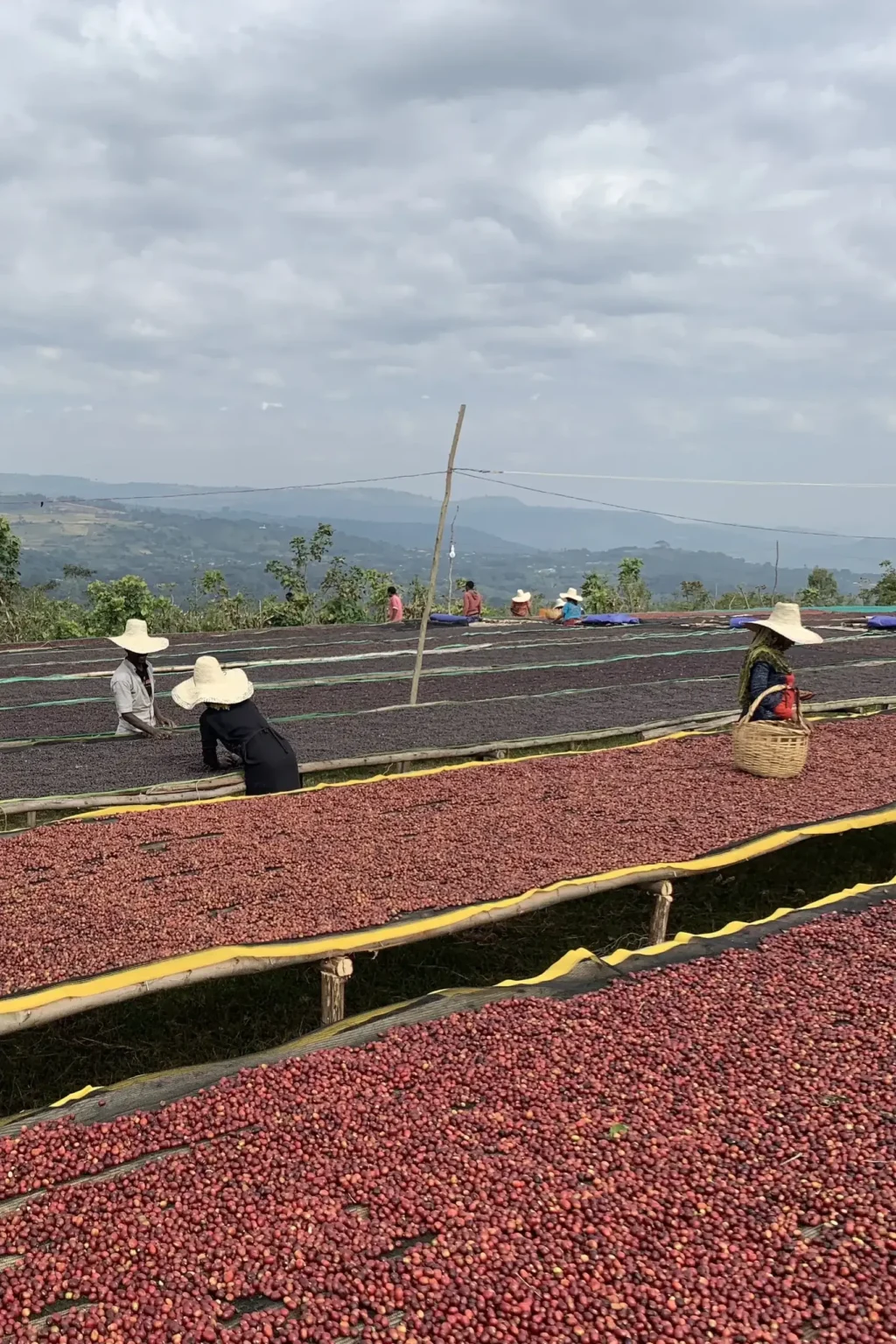
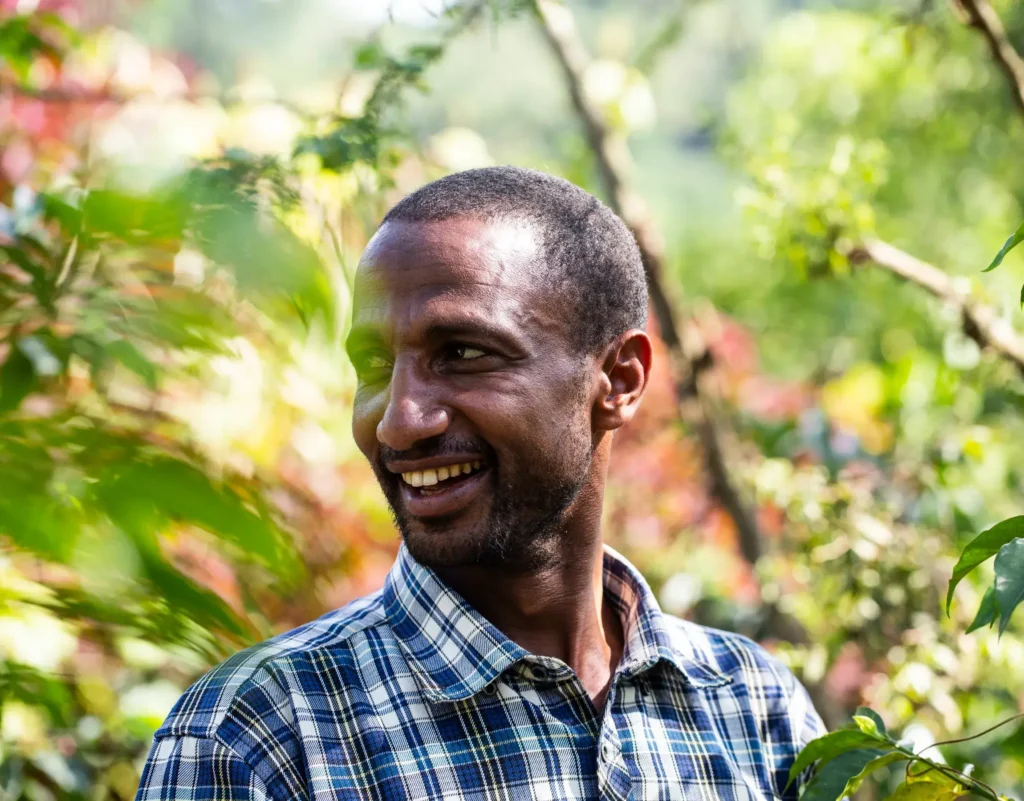
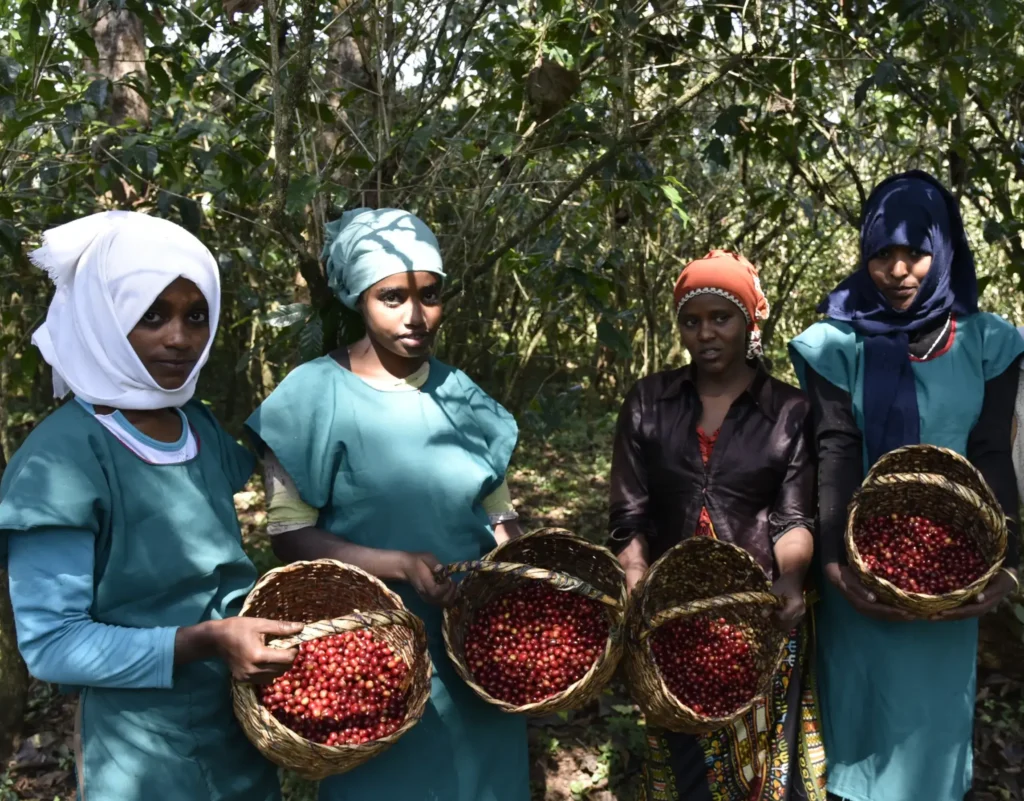
Attached to the farm where he grew up, Khalid manages the Echemo family farm with the same dedication as his father and grandfather before him. He now works with his brother, and both are constantly striving to improve the quality of their coffee. Today, the farm has 31 raised beds for drying coffee, 6 of which are reserved for the honey process. For his natural process, Khalid Shifa harvests and sorts the finest cherries with the greatest care. They are then sun-dried on raised beds for 3 weeks. Every day, the cherries are mixed to ensure even drying.
Echemo serves as both a farm and processing site, possessing historical significance. The name “Echemo” derives from a tree associated with creating fire, and the coffee varieties grown here are notably disease resistant. These seedlings were collected by Khalid’s grandfather from Choche, a place often debated as the origin site of coffee in Kata Mudga area. Echemo Farm, which has 160 drying beds, processes up to seven containers of coffee each season and is equipped for various coffee processing methods. The harvest season typically is from November to mid-January, but this year they started harvesting in September/October due to unexpected climate changes.
About the producer
Khalid Shifa is at the forefront of coffee suppliers for Belco from Ethiopia, primarily processing from Echemo, Badaye, and Loya Sedi processing stations all in Oromia Region, Jimma Zone. Khalid’s team prepares extensively for each harvest, starting as early as August. Preparations include servicing machines, maintaining water and electricity supplies, and readying equipment and beds. They clean nets, replace bed wood, and prepare warehouses, ensuring the sites are organized and functional before the harvest begins.
Khalid’s team also trains employees on collection standards, financial processes, and proper documentation. Financial challenges, labour shortages, and unpredictable weather are persistent obstacles. In 2021, they started an out-grower farmer training program and have since expanded their farmers list from 27 to 110 out growers total for all stations. These partnerships are built on agreements that cover cherry purchase prices and commissions, along with training in organic farming practices, focusing on compost use instead of chemical fertilizers.
Quality control is integral to Khalid Shifa’s business. The internal audits involve detailed questionnaires covering various aspects of farm management, while external audits are done by ECOCERT, which provides organic certification. This rigorous certification process starts in June and usually takes three months, include inspections of farm practices, purchase records, and export processes to confirm traceability and compliance throughout production. Khalid’s business requires annual renewals for several licenses: the Supplier License, Export License, and Grower License. These renewals are managed carefully to ensure readiness for the coffee harvest. The coffee is transported from Agaro to Addis Ababa, passing through several checkpoints, including Jimma, Welkite, and Dimtu. Upon arrival in Addis, the coffee undergoes a final round of processing at a contracted dry mill, where it is cleaned, graded, and packed for shipment.
About the collaborations
Khalid is collaborating with BELCO and Roasters on an Agroforestry Nursery Site Establishment project. This initiative aims to raise awareness about the link between coffee cultivation, biodiversity, and climate change. By integrating agroforestry practices, the project seeks to enhance farm productivity, promote biodiversity, and protect the environment. In addition to their coffee production activities, Khalid Shifa is dedicated to community projects.